

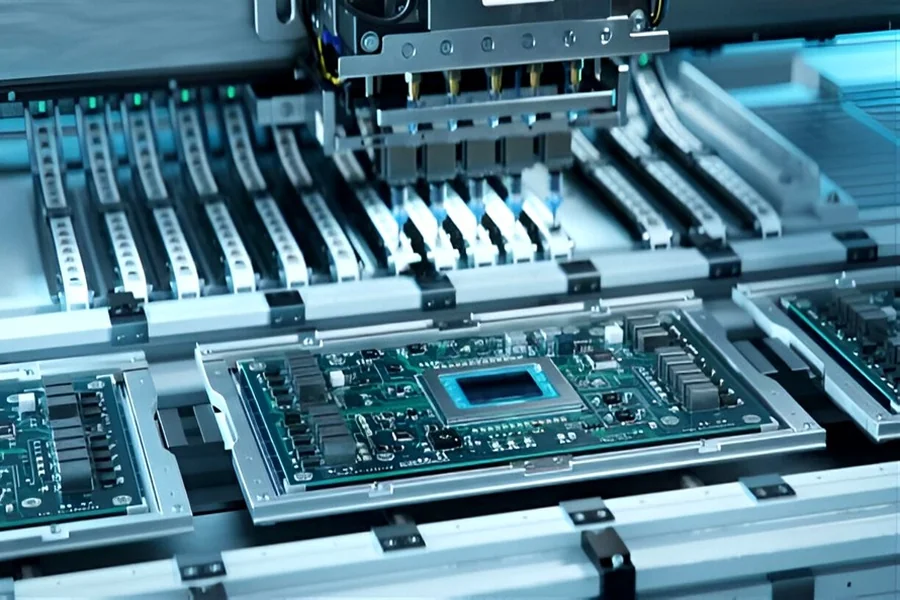
In today’s fast-paced electronics industry, high volume PCB assembly has become a cornerstone of mass production for consumer electronics, automotive systems, industrial controls, and communication devices. It refers to the process of manufacturing and assembling printed circuit boards (PCBs) in large quantities with consistent precision, speed, and reliability. As companies push for faster market entry and cost-efficient solutions, high-volume PCB production offers the perfect balance of scalability and quality.
What Is High Volume PCB Assembly?
High volume PCB assembly involves producing thousands or even millions of PCBs in a continuous process using advanced automation, precise manufacturing controls, and stringent quality standards. This approach ensures uniformity across all boards — a critical requirement for industries where even the smallest variation can lead to performance issues.
The process typically utilizes automated surface mount technology (SMT) lines, high-speed pick-and-place machines, reflow soldering systems, and optical inspection tools to deliver consistent results. Manufacturers specializing in high-volume production must maintain robust supply chains, optimized assembly lines, and efficient testing methods to ensure each PCB meets design and performance specifications.
Advantages of High Volume PCB Assembly
One of the most significant benefits of high volume PCB assembly is cost efficiency. As production scales up, the per-unit cost of materials, labor, and setup decreases dramatically. This allows manufacturers to achieve competitive pricing without sacrificing quality. Automated systems also minimize human error, resulting in improved yield rates and higher reliability.
Additionally, high-volume production ensures faster turnaround times. Once the assembly line is optimized for a particular design, thousands of units can be produced daily with remarkable consistency. This is especially beneficial for product launches and ongoing mass-market demand where rapid replenishment and timely delivery are essential.
Furthermore, advanced automation and process standardization lead to better quality control. Every stage — from component placement to final inspection — is monitored using machine vision systems and statistical process controls. This guarantees that every circuit board leaving the production line meets the same exacting standards.
Applications of High Volume PCB Assembly
High volume PCB assembly is indispensable across multiple sectors:
- Consumer Electronics: Smartphones, tablets, televisions, and gaming consoles rely on mass PCB production for uniform performance and affordability.
- Automotive Industry: Modern vehicles integrate numerous electronic control units (ECUs) and sensors, requiring consistent and scalable PCB manufacturing.
- Industrial Automation: Equipment such as controllers, sensors, and drives depend on durable and precisely assembled PCBs for reliability.
- Telecommunications: Networking devices and base stations require large-scale PCB production for seamless global connectivity.
- Medical Devices: High-demand devices like blood pressure monitors, glucose meters, and diagnostic tools benefit from cost-efficient large-scale assembly.
These industries depend on the precision and repeatability offered by high volume PCB assembly to meet market needs without compromising quality.
Key Processes in High Volume PCB Assembly
The success of high volume PCB assembly lies in a well-defined, automated process that ensures accuracy and efficiency at every step.
- Component Sourcing and Inventory Management
Manufacturers handling high volumes must maintain a reliable network of suppliers to ensure uninterrupted production. Components are sourced in bulk and verified for authenticity and compliance to avoid delays and defects.
- Automated SMT and THT Assembly
Surface Mount Technology (SMT) allows high-speed placement of tiny components with pinpoint accuracy, while Through-Hole Technology (THT) handles larger or high-power components. Multiple SMT lines running simultaneously ensure that production keeps pace with demand.
- Reflow and Wave Soldering
Once components are placed, they are soldered using automated reflow ovens for SMT parts or wave soldering machines for through-hole parts. Temperature control and precise timing are critical to achieving reliable solder joints.
- Inspection and Quality Control
Each PCB undergoes Automated Optical Inspection (AOI), X-ray analysis, and functional testing. These systems detect solder defects, misalignments, and shorts early in the process, ensuring that only fully functional boards proceed to packaging.
- Packaging and Delivery
PCBs are cleaned, tested, and packaged using anti-static materials before shipment. Logistics coordination ensures timely delivery to clients across the globe.
Quality and Efficiency in High Volume PCB Assembly
Achieving superior quality in high-volume production requires a combination of advanced machinery, experienced technicians, and strict process control. State-of-the-art equipment allows for micro-level accuracy, ensuring that even components with the smallest pitch are correctly placed and soldered.
Moreover, manufacturers employ real-time monitoring systems to oversee every phase of the assembly line. These systems collect data to identify bottlenecks, optimize workflows, and maintain continuous improvement. With such precision, high volume PCB assembly guarantees that each board meets exact design specifications, ensuring reliability and performance consistency across all units.
Environmental and compliance standards also play a major role. Reputable manufacturers follow RoHS (Restriction of Hazardous Substances) and ISO 9001 standards, ensuring sustainable production practices and product safety.
The Future of High Volume PCB Assembly
As electronic products become more compact, intelligent, and connected, the complexity of PCBs continues to increase. Manufacturers are integrating AI-driven quality checks, automated testing systems, and IoT-enabled monitoring for predictive maintenance. These innovations are shaping the future of high volume PCB assembly, making it faster, more accurate, and more sustainable.
The global demand for electronics is projected to rise steadily, driving the need for scalable and cost-effective PCB assembly solutions. Companies that invest in advanced automation and efficient production systems will have a competitive edge in meeting high-volume requirements.
Conclusion
In a world where speed, consistency, and quality define success, high volume PCB assembly is essential for mass electronics production. It allows businesses to scale efficiently, maintain cost-effectiveness, and deliver products that meet global standards.
For organizations seeking unmatched precision, reliability, and scalability, partnering with the best PCB assembly service ensures your high-volume production runs seamlessly from prototype to mass manufacturing. With expert engineering, automated technology, and strict quality control, your products will reach the market faster while maintaining the superior performance your customers expect.
